CULIACÁN, MEXICO · REMOTE FOR THE US & CANADA
Nearshore freelance developer in Mexico for U.S. and Canadian teams
I'm Daniel Pereda, a software developer based in Culiacán, Sinaloa, Mexico. I build websites, custom web applications, automations and AI chatbots for businesses that want a developer who works their hours, speaks their language and answers directly — without an agency in the middle.
Why hire a nearshore developer instead of offshore
Nearshore means working with someone in a nearby country and a compatible time zone. The practical difference with offshore development is not the price tag; it is how fast questions get answered. When your developer is online at the same time you are, a blocker raised at 10 a.m. gets resolved before lunch instead of the next morning.
That matters most on small and mid-sized projects, where there is no project manager absorbing the delay. A one-day lag on every question turns a two-week build into a five-week one. Working in overlapping hours keeps feedback loops short: you review something in the afternoon, I adjust it the same day.
Time zone: how my hours line up with yours
Culiacán uses Sinaloa time, UTC−7, all year. Mexico stopped observing daylight saving time on October 30, 2022, and Sinaloa did not keep it, so my clock never changes — the same as Arizona.
In practice that means:
- From March to November, my hours match U.S. Pacific time exactly (Los Angeles, Seattle, San Francisco, Vancouver).
- From November to March, my hours match U.S. Mountain time (Denver, Phoenix, Calgary) and are one hour ahead of the West Coast.
- Central and Eastern teams get a full overlap in their late morning and afternoon, which is enough for daily check-ins and same-day reviews.
What I can build for you
I work on the kind of projects where one focused developer moves faster than a team you have to coordinate:
- Websites and landing pages with Next.js, built to load fast and rank.
- Custom web applications and internal tools: dashboards, inventory, role-based access and reports with React, NestJS and PostgreSQL.
- Process automation and integrations with Python and Node.js: automated reports, API connections and data workflows.
- AI chatbots and LLM workflows for websites or the WhatsApp Business Platform, with human hand-off.
- Web scraping of public data, cleaned and delivered to a spreadsheet, database or dashboard.
- QA and maintenance: API and regression tests, static analysis and bug fixing on existing systems.
My background, in plain terms
I studied programming at a technical high school and I'm currently studying Computer Systems Engineering at TecNM Campus Culiacán. Alongside school, I have worked professionally since 2023.
At ZazPay, a fintech company in Culiacán, I worked first in QA — building automation and validation tools and data pipelines to analyze multiple repositories — and then as a developer, building a supervisor and promoter management system with NestJS, React and JWT role-based access. At Outlier, the AI training platform owned by San Francisco–based Scale AI, I worked remotely evaluating AI-generated code in Python and JavaScript for correctness, logic errors and instruction following. Before that, I built back-end features for a transactional system at Faena Uniformes with PHP and SQL.
My own projects are public: ScriptC, a code quality and security linter published on Open VSX; PICS, a predictive irrigation prototype presented at FEMECI Sinaloa 2025; EvaluaProf, an academic review analytics platform; and Menu Engine and ARE Engine, two AI products in development. Each case study states its real status — beta, academic or validated in a controlled environment.
Communication: English, Spanish and no middlemen
I work in English (B2) and Spanish. You talk directly to the person who designs, writes and tests your code — not to an account manager who relays messages. Written updates, recorded walkthroughs and short calls are all fine; we agree on the rhythm at the start.
Working with one person also has limits, and you should know them before hiring. If your project needs several developers working in parallel, an agency or a staffing firm is a better fit, and I will tell you that up front. Where a solo developer shines is a well-scoped project that benefits from one person owning the whole thing end to end.
How a project with me works
I prefer short, staged engagements over long open-ended ones, because both sides can see results before committing more.
- Intro call: you describe the problem, who will use the result and what is blocking you today.
- Written scope: what gets built, in what order, what is out of scope and the price for that stage.
- Build in short iterations with something you can click on early, not a big reveal at the end.
- Testing and documentation for the critical flows, so the result is maintainable.
- Handover: code, credentials and docs in your accounts. You own everything.
Freelancer, agency or staffing firm?
If you need a long-term, full-time engineer embedded in your team, a nearshore staffing firm or an employer of record handles payroll and Mexican labor compliance for you. If you need a team of five next month, an agency is built for that.
A freelance developer makes the most sense when you have a defined project — a new website, an internal tool, an automation, a chatbot pilot or a rescue of an existing system — and you want direct communication and full ownership of the result. If you are unsure which model fits, tell me about the project and I will give you an honest answer, even if the answer is not me.
What I can build for you
Websites and landing pages
Fast, clear websites that explain what you do and turn visitors into inquiries.
Custom software and internal tools
Web systems built around how you operate: dashboards, inventory, roles and reports.
Process automation and integrations
Connect your tools and remove repetitive work: automated reports, data entry and alerts.
AI chatbots and applied AI
AI assistants and workflows that answer, classify and extract data, with human review.
Web scraping and data extraction
Collect public web data in an orderly way: prices, catalogs and listings.
Software QA, testing and maintenance
API testing, bug fixing and maintenance so your system does not break in production.
Work you can verify
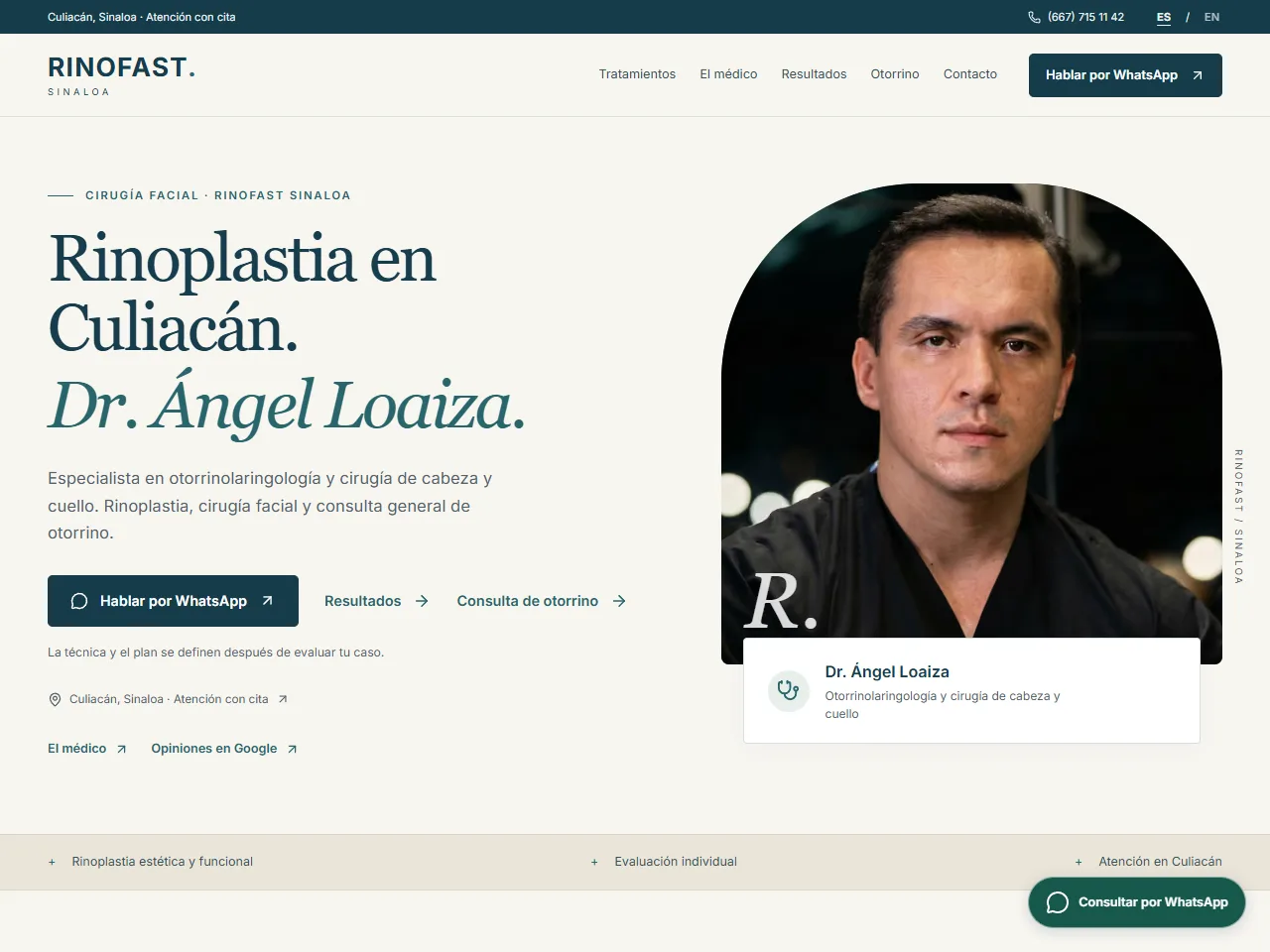
Rinofast Sinaloa
Services, specialist information and a direct route to WhatsApp for patients in Culiacán, Mexico.
View case study →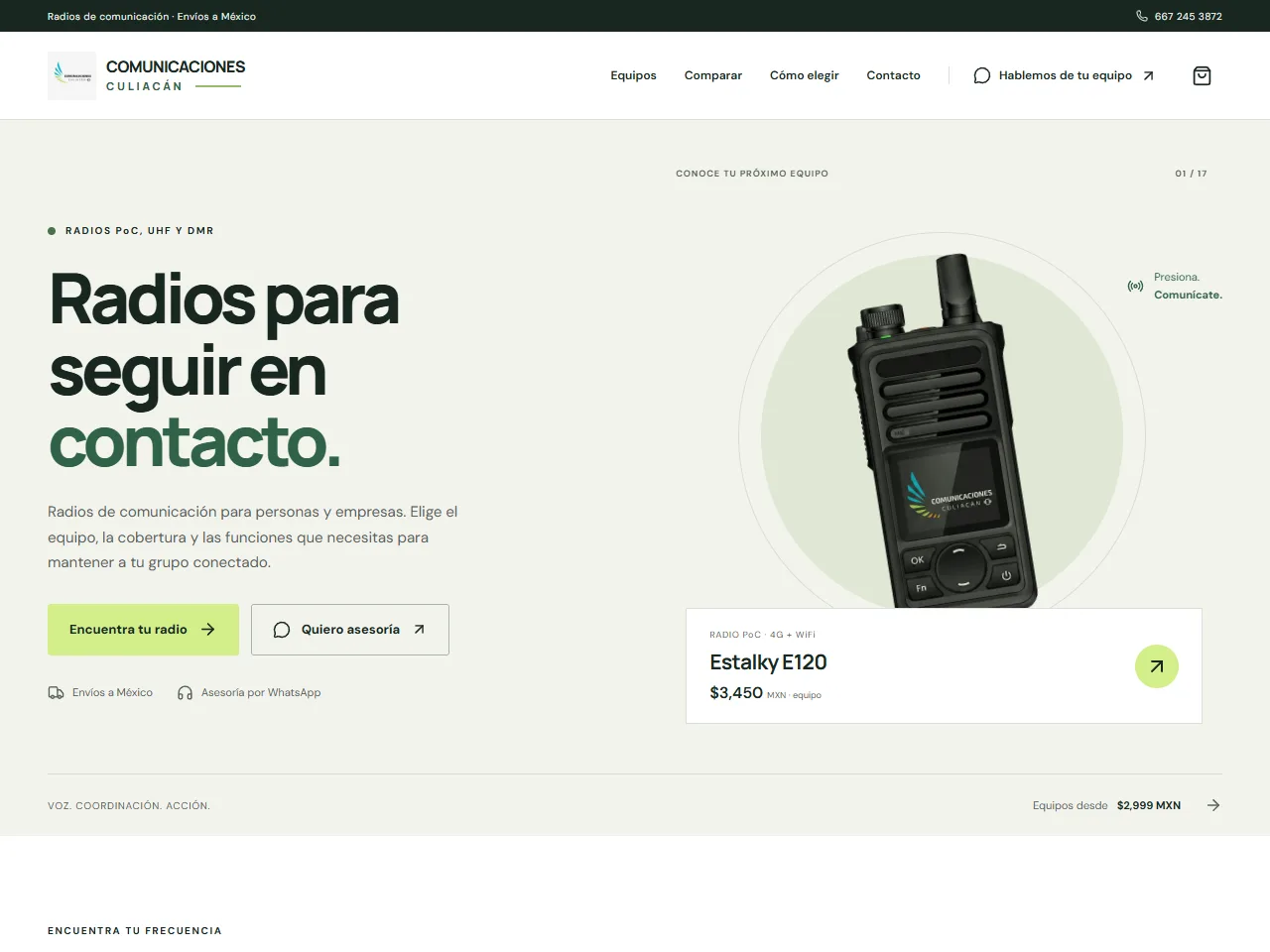
Comunicaciones Culiacán
A product catalog for comparing equipment and preparing a WhatsApp inquiry.
View case study →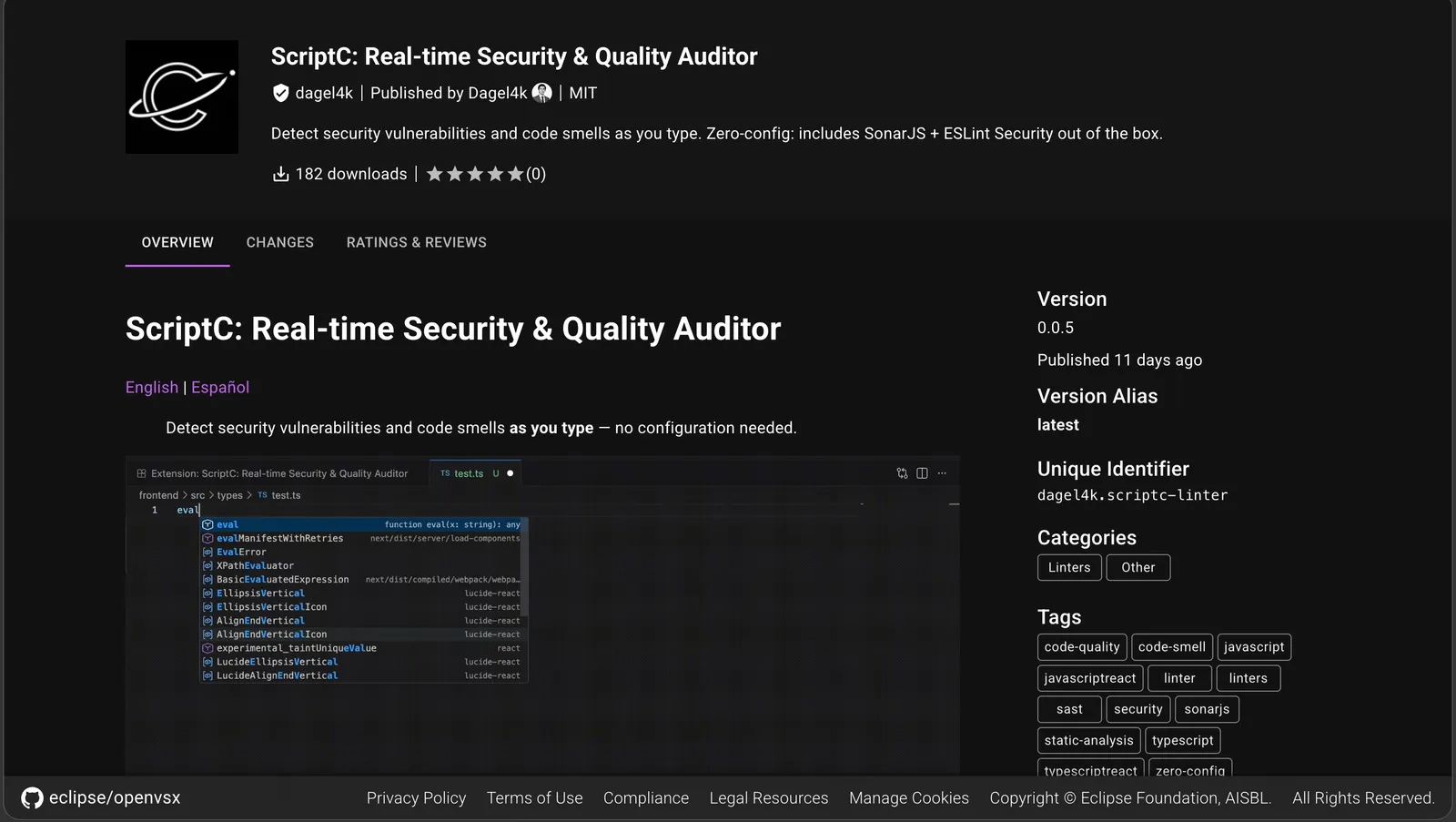
ScriptC
A local static analysis orchestrator. Multiple audit engines, one tool for the team.
View case study →Frequently asked questions
How do contracts work with a freelancer in Mexico?
We sign a simple agreement per stage that defines scope, deliverables, timeline, price and intellectual property. I work as an independent contractor, not as your employee, so there is no payroll on your side. If your company has its own contractor agreement, I'm happy to review and use it.
How do I pay a developer in Mexico in U.S. dollars?
International payments to independent contractors in Mexico are routinely made through bank transfers and online payment platforms that support USD. We agree on the method that works for your accounting before starting; payments are usually tied to stage milestones rather than paid all up front.
Who owns the code?
You do. The repository, credentials and documentation are delivered to your accounts, and the agreement assigns the intellectual property of the commissioned work to you once it is paid.
What hours are you available?
I work on Sinaloa time (UTC−7, no daylight saving time), which matches U.S. Pacific time from March to November and U.S. Mountain time the rest of the year. We set fixed overlap hours for calls and reviews at the start of the project.
How do we get started?
Send me a short description of what you want to build or fix, who will use it and any deadline. I reply personally with clarifying questions and, if it is a good fit, a written scope for the first stage.
Let’s see if it’s a fit
Send me a short description of what you need. I reply personally, usually with a few questions and a proposed first step.
Start the conversation ↗